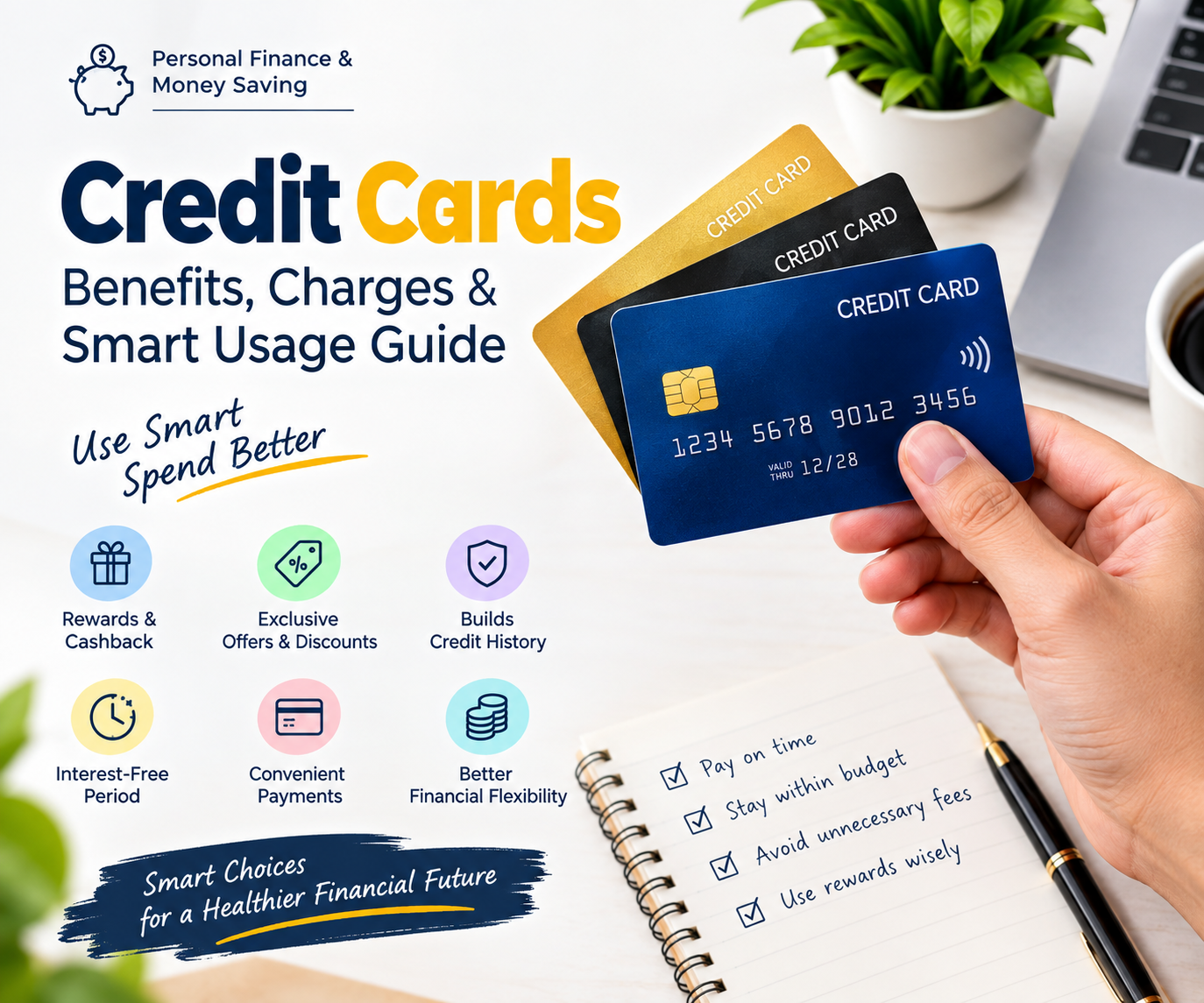
Credit cards have become a popular financial tool for shopping, online payments, travel, bill payments, and everyday expenses. When used responsibly, a credit card can offer convenience, rewards, discounts, cashback, and additional financial flexibility. However, careless use can also lead to high interest charges, growing debt, and financial stress.
Understanding how credit cards work is therefore important before using one regularly. This guide explains credit cards in simple terms, including their benefits, costs, important features, and practical tips for using them wisely.
What Is a Credit Card?
A credit card is a payment card that allows you to borrow money from a bank or financial institution to make purchases. Instead of paying directly from your bank account, you use the credit limit provided by the card issuer.
For example, if your credit card has a limit of ₹50,000, you may be able to make eligible purchases up to that amount. You then receive a monthly statement showing your transactions and the amount you need to pay.
If you pay the entire outstanding amount by the due date, you can generally avoid interest on eligible purchases. If you carry an unpaid balance, interest and other applicable charges may be added.
How Does a Credit Card Work?
Credit cards generally operate through a monthly billing cycle.
During the billing period, you make purchases using your card. At the end of the cycle, the card issuer generates a statement showing your total outstanding amount, minimum amount due, payment due date, and transaction details.
There are usually two important payment figures:
Total Amount Due: The complete amount you owe for the billing cycle.
Minimum Amount Due: The minimum payment required to keep the account from becoming overdue.
Paying only the minimum amount may prevent immediate late-payment consequences, but it can leave the remaining balance subject to interest and may take much longer to repay.
Benefits of Using a Credit Card
Credit cards can provide several useful benefits when managed properly.
1. Convenience
Credit cards make it easy to pay for purchases online and offline without carrying large amounts of cash.
2. Cashback and Rewards
Some cards provide cashback, reward points, discounts, or other benefits on eligible transactions. The value of these rewards depends on the card's terms and your spending habits.
3. Interest-Free Period
Many credit cards provide an interest-free period on eligible purchases when the full statement balance is paid by the due date. The exact period depends on the card and transaction.
4. Discounts and Offers
Banks and card networks frequently provide promotional offers on shopping, dining, travel, entertainment, and other categories.
5. Credit History
Responsible use and timely repayment can contribute to a positive credit history. Your credit profile can be relevant when applying for certain loans or other forms of credit.
Important Credit Card Charges
Before applying for a credit card, it is important to understand its charges.
Annual or Joining Fees
Some credit cards have joining fees, annual fees, or renewal charges. Certain cards may waive these charges when you meet specified spending conditions.
Interest Charges
If you do not pay your outstanding balance as required, interest may be charged according to the card's terms. Credit card interest can be significantly higher than the rates associated with many other forms of borrowing.
Late Payment Charges
Failing to make the required payment by the due date can result in late-payment charges and may negatively affect your credit profile depending on the circumstances.
Cash Withdrawal Charges
Credit card cash advances can involve additional fees and interest. They should not generally be treated like ordinary purchases.
Foreign Transaction Charges
International transactions may involve foreign currency conversion and applicable fees depending on the card.
Credit Card vs Debit Card
A debit card generally uses money available in your bank account, while a credit card allows you to spend using a credit facility provided by the issuer.
With a debit card, the money is generally deducted from your bank account when you make a transaction.
With a credit card, the issuer pays the merchant and you repay the card issuer according to your billing statement.
Both cards can be useful, but they work differently and should be managed accordingly.
How to Use a Credit Card Wisely
The biggest advantage of a credit card comes from responsible usage.
Pay the Full Bill on Time
One of the most useful habits is paying the full statement amount by the due date whenever possible. This helps you avoid carrying unnecessary credit card debt.
Spend Within Your Budget
A credit limit is not the same thing as available income. Having a ₹1 lakh credit limit does not mean you should spend ₹1 lakh.
Use your card for expenses that fit comfortably within your monthly budget.
Track Your Transactions
Review your credit card transactions regularly. This helps identify unnecessary spending, unexpected charges, or transactions you do not recognize.
Avoid Unnecessary Cash Withdrawals
Credit card cash advances can be expensive because they may involve additional fees and interest. Consider other options before using a credit card for cash withdrawal.
Understand the Rewards Program
Rewards can be useful, but they should not encourage unnecessary spending. Spending ₹10,000 just to receive a small reward is not a saving if you did not need the purchase.
How Credit Cards Can Help You Save Money
A credit card can sometimes help reduce expenses when its benefits match your normal spending.
For example, if you regularly purchase groceries and your card provides eligible cashback on grocery spending, you may receive some value from those transactions.
Similarly, travel-focused cards may provide benefits such as reward points or travel-related offers.
However, rewards should be considered an additional benefit rather than a reason to spend more.
The best approach is simple:
Spend because you need something, not because you want more rewards.
Common Credit Card Mistakes to Avoid
Many credit card problems come from a few common mistakes.
Paying Only the Minimum Amount
The minimum amount can look affordable, but paying only this amount can leave a significant balance outstanding.
Missing the Due Date
Late payments can result in charges and potentially affect your credit history.
Having Too Many Cards
Managing multiple cards can become difficult. More cards do not automatically mean better finances.
Ignoring Fees
Always check annual fees, transaction charges, foreign transaction fees, cash advance charges, and other applicable costs.
Spending Beyond Your Income
Credit cards should not be used as a substitute for income. Borrowing repeatedly for everyday expenses can create a cycle of debt.
Tips Before Applying for a Credit Card
Before choosing a credit card, consider the following:
-
Check the annual and joining fees.
-
Understand the interest rate and applicable charges.
-
Compare the rewards or cashback structure.
-
Check eligibility requirements.
-
Understand the billing cycle and payment due date.
-
Review foreign transaction and cash withdrawal charges.
-
Choose benefits that match your actual spending habits.
-
Read the card's terms and conditions carefully.
Final Thoughts
Credit cards can be useful financial tools when used responsibly. They can provide convenience, rewards, discounts, and payment flexibility. At the same time, unpaid balances, excessive spending, and high charges can turn a convenient payment method into expensive debt.
The key is to treat your credit card as a payment tool rather than extra income. Keep spending within your budget, monitor your transactions, understand the fees, and aim to pay your statement balance on time.
A credit card works best when you control your spending instead of allowing your spending to control your finances.


No comments yet
Have a question or insight regarding this guide? Share your thoughts below!
Leave Your Comment & Question
Your email address will not be published. Required fields are marked *