
Loans are an important part of personal finance. Whether you want to purchase a home, buy a vehicle, pay for education, manage an emergency expense, or start a business, a loan can provide the money you need when your savings are not enough. However, taking a loan also means taking on a financial responsibility that can last for several months or even years.
Understanding how loans work before borrowing can help you make better financial decisions, avoid unnecessary debt, and save money on interest.
What Is a Loan?
A loan is money borrowed from a bank, financial institution, or other lender that must be repaid over an agreed period. The borrower generally pays back the amount through regular installments, along with interest and applicable fees.
The original amount borrowed is called the principal, while the additional amount charged by the lender is called interest. Together, these form the cost of borrowing.
For example, if you borrow ₹5 lakh for a specific period, you will normally repay the ₹5 lakh principal plus interest according to the terms of your loan agreement.
Common Types of Loans
Different loans are designed for different financial needs. Some of the most common types include:
1. Personal Loan
A personal loan can be used for various purposes, such as medical expenses, weddings, home improvements, travel, or other personal requirements. These loans are often unsecured, meaning you generally do not need to provide an asset as security.
However, interest rates can be higher than secured loans, so borrowers should compare offers carefully.
2. Home Loan
A home loan is used to purchase, construct, or sometimes renovate a property. Since the property generally serves as security for the loan, interest rates may be lower than those on many unsecured loans.
Because home loans can run for many years, even a small difference in interest rate can make a significant difference to the total amount repaid.
3. Vehicle Loan
Vehicle loans help people finance the purchase of cars, motorcycles, and other vehicles. The vehicle may serve as security for the loan.
Before taking a vehicle loan, borrowers should consider not only the EMI but also fuel, insurance, maintenance, taxes, and other ownership costs.
4. Education Loan
Education loans can help students and families manage the cost of higher education. Depending on the loan and lender, financing may cover tuition fees and certain related expenses.
Students should understand repayment conditions, interest charges, and any applicable grace or repayment period before accepting the loan.
5. Business Loan
Business loans can provide funding for starting or expanding a business, purchasing equipment, managing working capital, or meeting other business requirements.
Since business income can fluctuate, entrepreneurs should make sure the expected cash flow is sufficient to handle loan repayments.
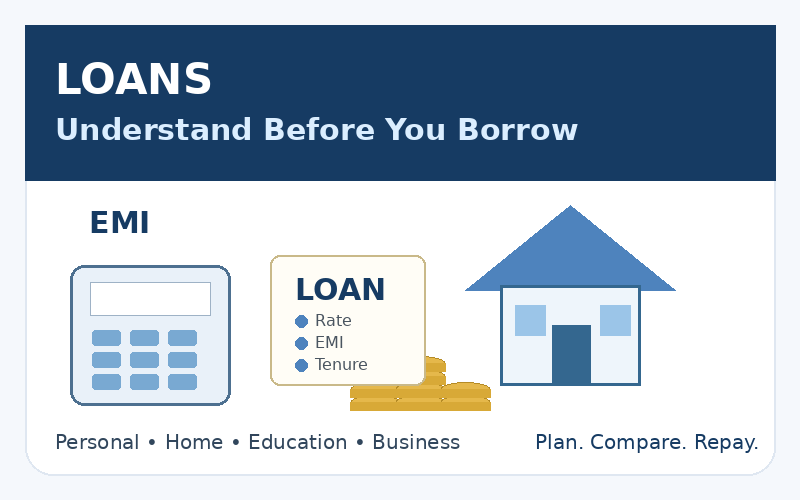
What Is an EMI?
EMI stands for Equated Monthly Instalment. It is the regular amount paid toward a loan every month.
An EMI generally includes two components:
-
Principal repayment
-
Interest payment
In many loans, the proportion of interest and principal changes over time. At the beginning, a larger portion of the EMI may go toward interest, while more of the payment may go toward principal later in the repayment schedule.
Understanding your EMI helps you determine whether a loan fits comfortably within your monthly budget.
Factors to Check Before Taking a Loan
A loan should never be judged only by its advertised interest rate. Consider the complete cost and terms.
Interest Rate
Compare interest rates offered by different lenders. Even a small difference can affect the total interest paid, especially on large or long-term loans.
Loan Tenure
A longer tenure can reduce your monthly EMI but may increase the total interest paid. A shorter tenure may result in higher monthly payments but can reduce the overall interest cost.
Processing Fees and Other Charges
Check for processing fees, documentation charges, late-payment penalties, foreclosure or prepayment charges, and other applicable costs.
Your Monthly Budget
Before borrowing, calculate your regular income and expenses. Make sure the EMI leaves enough money for essential expenses, savings, and emergencies.
How to Save Money on Loan Interest
Borrowing money does not necessarily have to become expensive if you manage your loan carefully.
First, compare multiple lenders instead of accepting the first offer. Check the interest rate, fees, tenure, and repayment conditions.
Second, maintain a healthy credit history. Lenders may consider your credit profile when deciding loan eligibility and pricing.
Third, avoid borrowing more than you actually need. A larger loan means a larger principal and potentially more interest.
Fourth, consider making additional principal payments when permitted and financially practical. Reducing the outstanding principal can potentially lower future interest costs, depending on the loan terms.
Finally, avoid taking multiple unnecessary loans at the same time. Managing several EMIs can put pressure on your monthly cash flow.
Should You Take a Loan?
A loan can be useful when it helps you achieve an important financial goal or manage a genuine need. However, borrowing simply because credit is available can lead to unnecessary financial pressure.
Before taking a loan, ask yourself:
-
Do I really need to borrow this money?
-
Can I comfortably afford the EMI?
-
Have I compared different lenders?
-
What is the total repayment amount?
-
Are there additional fees or penalties?
-
Do I have an emergency fund?
-
Can I continue making payments if my income temporarily decreases?
If the answers make you uncomfortable, it may be better to reconsider the loan amount, wait, save more money, or explore other options.
Final Thoughts
Loans can be valuable financial tools when used responsibly. They can help people purchase homes, fund education, manage emergencies, buy vehicles, and grow businesses. But every loan creates a repayment obligation, so understanding the cost before signing an agreement is essential.
The best approach is to borrow only what you need, compare lenders, understand the interest rate and fees, choose a manageable tenure, and include the EMI in your overall monthly budget.
Good financial planning is not simply about earning more money. It is also about using borrowed money wisely, controlling debt, and making decisions that support your long-term financial goals.
Disclaimer: This article is for general educational purposes only and should not be considered financial advice. Loan eligibility, interest rates, fees, repayment terms, and other conditions vary by lender and borrower. Always review the applicable loan agreement and consider professional advice when necessary.


No comments yet
Have a question or insight regarding this guide? Share your thoughts below!
Leave Your Comment & Question
Your email address will not be published. Required fields are marked *